How Elevation Reshapes Odds Movement for Tennis Matches at High-Altitude Venues
Written by Ulrich Berger · Aug 26, 2026
How Elevation Reshapes Odds Movement for Tennis Matches at High-Altitude Venues
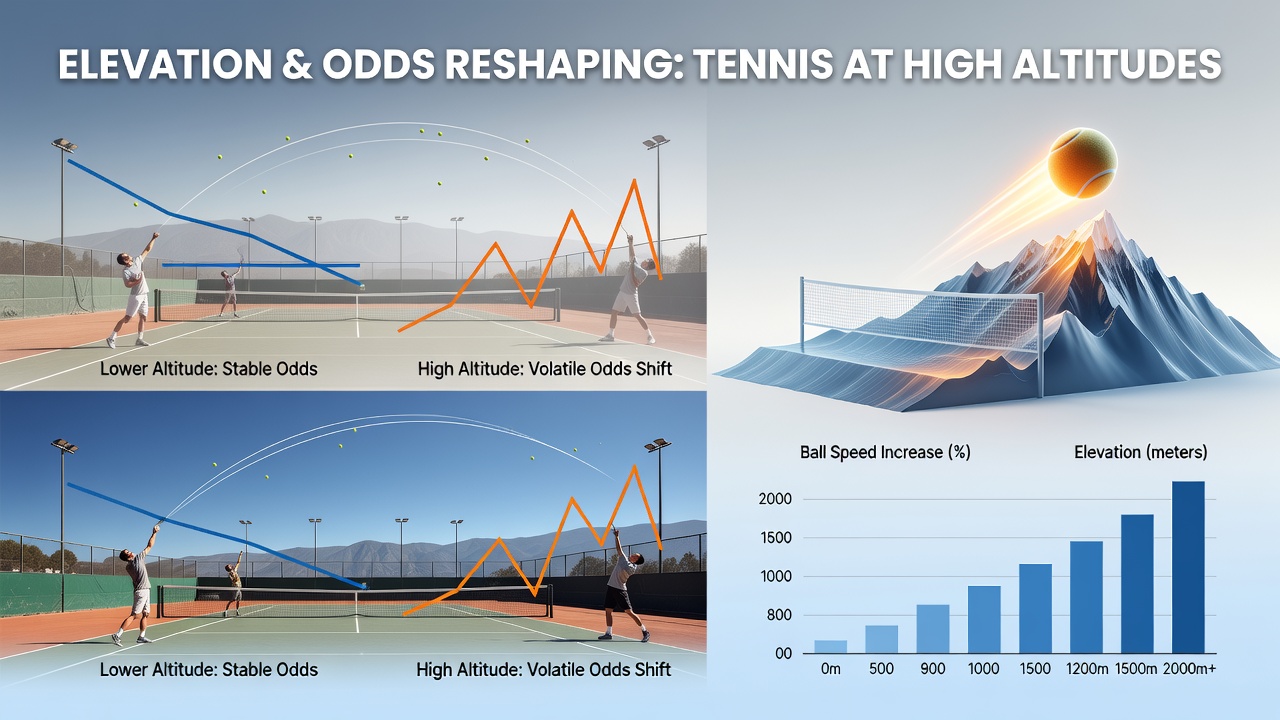
High-altitude venues alter the physics of tennis in measurable ways that betting markets track closely through historical performance data and adjusted probability models. The thinner air at elevations above 1,500 meters reduces air resistance, which allows the ball to travel farther and faster while also changing how players generate spin and control shots. Observers note that these conditions shift win probabilities for certain player archetypes, and bookmakers respond by moving lines accordingly in the days leading up to events.
Physics Behind Ball Behavior at Elevation
Atmospheric pressure drops as elevation increases, which directly affects the distance a tennis ball covers during flight. Research from atmospheric science programs at institutions such as the University of Colorado shows that a serve struck at 2,500 meters can gain roughly 5 to 10 percent more forward distance compared with sea-level conditions. Players who rely on heavy topspin often find their shots landing deeper or shorter than expected, while flat hitters gain an advantage because the ball dips less sharply after crossing the net. Data collected from ATP and WTA matches at these sites indicate that average rally lengths shorten and service games hold at higher rates when both competitors have limited prior exposure to the conditions.
Key Venues and Historical Patterns
Bogotá at 2,640 meters, Mexico City near 2,240 meters, and Johannesburg around 1,750 meters host regular professional events where these effects appear consistently in match statistics. Tournament records from the past decade reveal that visiting players from low-altitude regions post lower first-serve percentages and commit more unforced errors during the opening rounds. In contrast, competitors who train or reside at similar elevations maintain steadier performance metrics across multiple sets. Markets adjust opening odds to reflect these historical splits, then continue to move as injury reports, recent form, and acclimatization schedules become available.
Odds Movement Mechanics in Response to Altitude
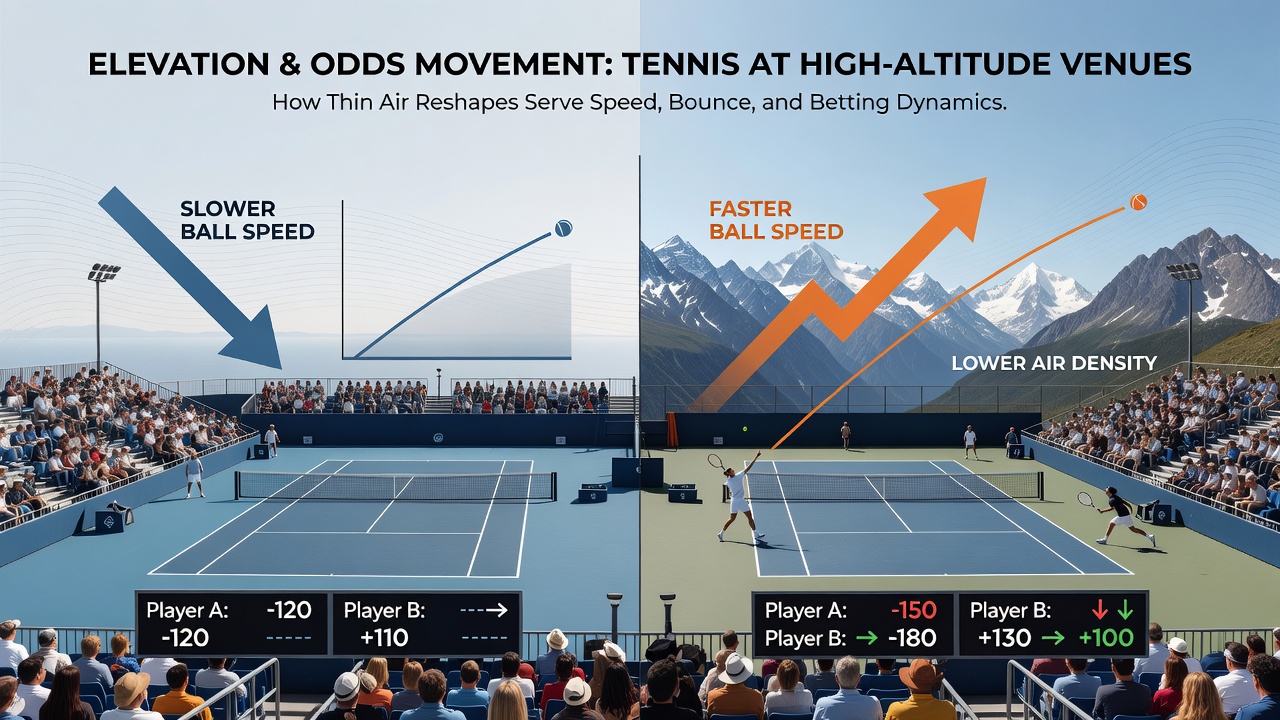
Betting operators incorporate altitude-specific adjustments into their pricing algorithms by weighting past results at each venue more heavily than neutral-surface data. When a low-altitude specialist faces a local player in the first round, the line often opens with the visitor at plus-money prices that tighten only if sharp money supports the favorite after practice observations. Live betting markets react quickly to early set scores because the physical toll of altitude becomes visible within the first 30 minutes of play. Figures from sports analytics firms demonstrate that overround percentages remain stable, yet the distribution of moneyline and total-game markets shifts measurably compared with sea-level tournaments.
Player Acclimatization and Market Timing
Arrival schedules influence how quickly markets settle on final prices. Athletes who arrive less than 48 hours before their first match show measurable drops in movement efficiency according to GPS tracking studies conducted during South American swing events. Those who schedule longer stays post steadier hold percentages, and sharp bettors monitor flight manifests and practice reports to anticipate line movement. In August 2026 several tournaments on the Latin American calendar fall during peak summer travel periods, creating additional variables around recovery time that operators must factor into their models.
Data Sources Informing Market Adjustments
Industry reports compiled by organizations such as the ATP Tour provide detailed venue-specific statistics that feed into pricing engines. Academic papers from Australian universities examining ball aerodynamics supply supplementary inputs for modeling total points per game, while Canadian meteorological archives offer historical pressure readings used to calibrate expected serve speeds. These combined datasets allow operators to generate venue multipliers that adjust baseline probabilities before odds are released to the public.
Conclusion
Elevation introduces quantifiable changes to tennis dynamics that propagate directly into betting market behavior at high-altitude venues. Performance databases, atmospheric measurements, and player scheduling details combine to produce odds that reflect these environmental factors more accurately than generic surface-based models. As tournaments continue at sites such as Bogotá and Mexico City, the relationship between altitude data and line movement remains a central element of professional tennis pricing.