Tracing how track surface variations reshape betting market behaviors during non-festival horse racing meets
Written by Sam Lehmann · Aug 23, 2026
Tracing how track surface variations reshape betting market behaviors during non-festival horse racing meets
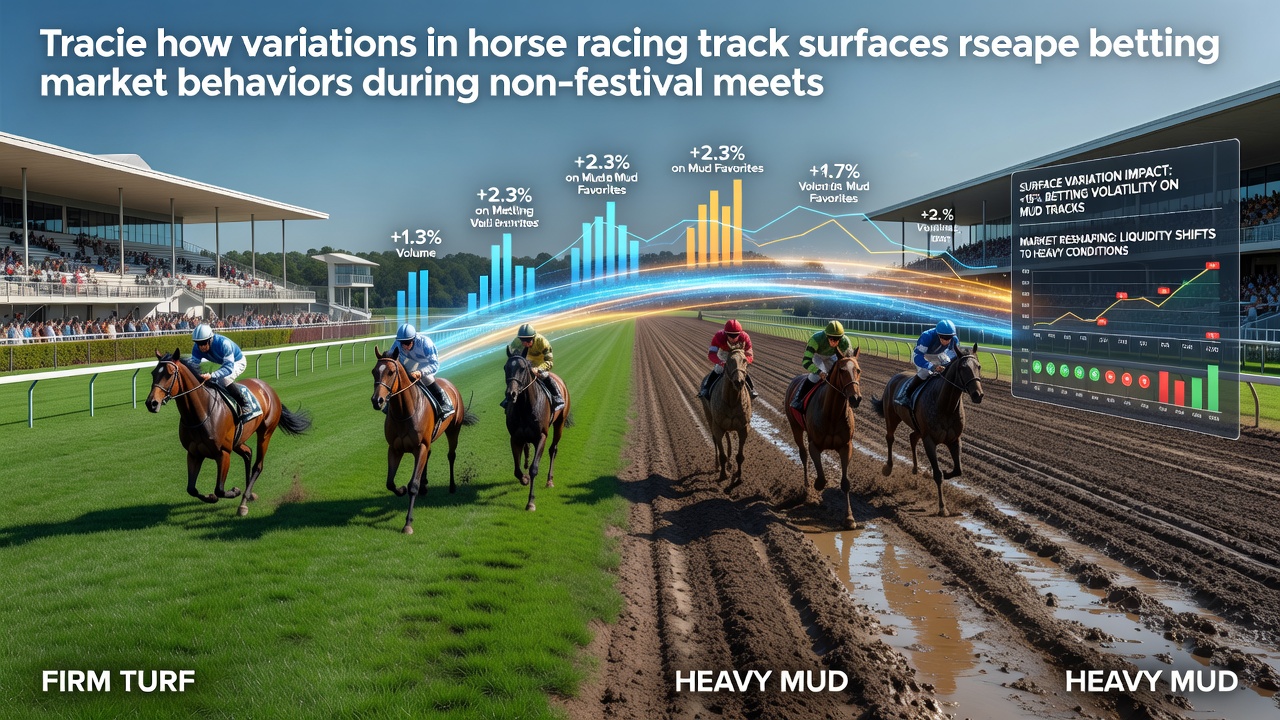
Track surface conditions at non-festival horse racing meets create measurable shifts in how bettors allocate their stakes and how odds adjust in real time. Surface variations such as going reports ranging from firm to heavy on turf or synthetic all-weather tracks alter horse performance data, which in turn influences market liquidity and the timing of wagers placed through licensed operators.
Understanding surface types and their documented effects
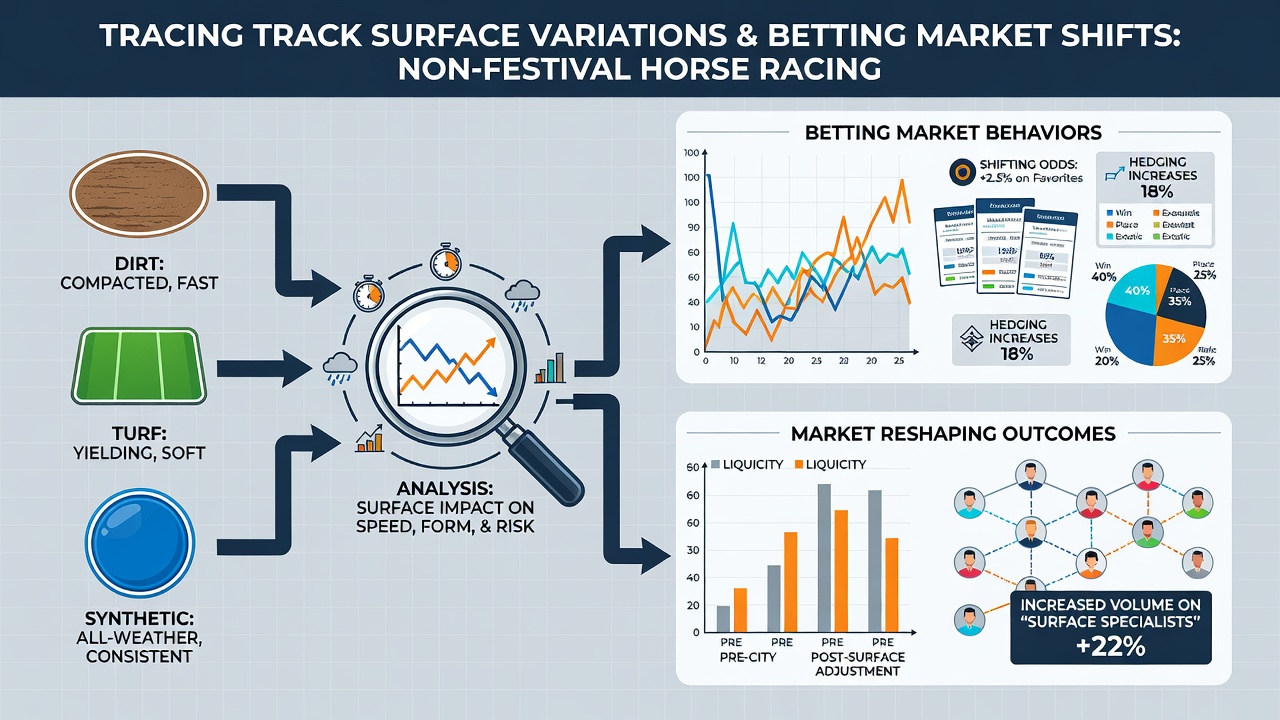
Non-festival meets typically feature a mix of turf and all-weather surfaces, each responding differently to weather patterns throughout the calendar year. Turf tracks change with rainfall levels, producing official going descriptions that update daily, while all-weather circuits maintain more consistent ratings yet still experience temperature-related friction differences. Observers note that these distinctions appear in performance statistics compiled by racing authorities, where times and margins correlate directly with surface readings recorded at each meeting.
Data collected across multiple seasons shows that softer ground slows overall race times by several seconds per furlong on turf, prompting adjustments in sectional analysis used by professional syndicates. All-weather surfaces, by comparison, retain higher speeds during wet periods, leading to different expected outcomes that betting exchanges reflect through updated price movements. Researchers tracking these patterns have linked surface reports to changes in win probability distributions published in industry databases.
Market behavior shifts during variable conditions
Betting volumes on individual runners fluctuate when surface conditions deviate from seasonal averages, with late money often concentrating on horses that have recorded prior success on similar going. Exchange markets exhibit wider spreads during heavy ground periods because liquidity thins as participants reduce exposure to uncertain outcomes. Figures released by the Australian Racing Board indicate that non-festival fixtures experience a 12 to 18 percent rise in place betting when tracks are officially described as soft or heavy, compared with firm ground equivalents.
Traders monitoring these meets report that odds on front-runners shorten more rapidly on faster surfaces, while hold-up horses attract increased support once rain softens the ground. This pattern repeats across UK, Irish, and Australian venues where non-festival schedules dominate the fixture list outside major events. Market depth contracts on days when multiple surface changes occur between races, forcing bookmakers to widen margins to manage risk exposure.
Regional examples and performance records
Take one series of fixtures held at Australian provincial tracks during August 2026, where consecutive days of rain transformed turf surfaces from good to soft between meetings. Betting turnover data showed a clear migration toward each-way wagers on stayers with proven wet-ground form, while sprint markets saw reduced activity overall. Similar observations appear in North American records maintained by the National Thoroughbred Racing Association, where all-weather surfaces at tracks like Woodbine produce steadier market activity even when temperatures drop.
Those who study these patterns find that surface changes also affect the pace at which odds drift or contract in the final minutes before post time. On firmer ground, late support clusters around horses with recent course-and-distance wins, whereas softer conditions spread interest across a broader range of runners with stamina credentials. Industry reports from the European Pari Mutuel Association document corresponding adjustments in pool sizes that align with official going updates released by clerks of the course.
Data sources and regulatory context
Analysis of these dynamics draws from performance databases maintained by bodies such as the National Thoroughbred Racing Association in the United States and the European Pari Mutuel Association, which compile surface-related statistics across jurisdictions. These organizations publish aggregated figures that allow comparison of betting patterns under varying ground conditions without relying on single-country regulators. Academic papers examining race outcomes have further quantified how surface ratings influence expected value calculations used by systematic bettors.
Market operators adjust their risk models in response to these documented correlations, incorporating surface variables into pricing algorithms that update continuously during non-festival periods. The result appears in observable changes to overround percentages and the distribution of stakes across different bet types when ground conditions shift mid-meeting. Observers tracking multiple venues note that such adjustments occur consistently rather than as isolated events.
Conclusion
Surface variations at non-festival horse racing meets produce traceable effects on betting market behaviors through documented changes in performance data and wager distribution. Records maintained by international racing bodies demonstrate repeatable patterns in odds movement and turnover allocation that correspond directly to official going reports. These relationships continue to shape how participants engage with markets across different jurisdictions and surface types throughout the racing calendar.